



Teamtronic strengthens its European position with strategic co-ownership in Slovakian OMS
The investment marks an important step in the company's 2028 strategy focusing on international growth and strengthening internal resources and supply chains.
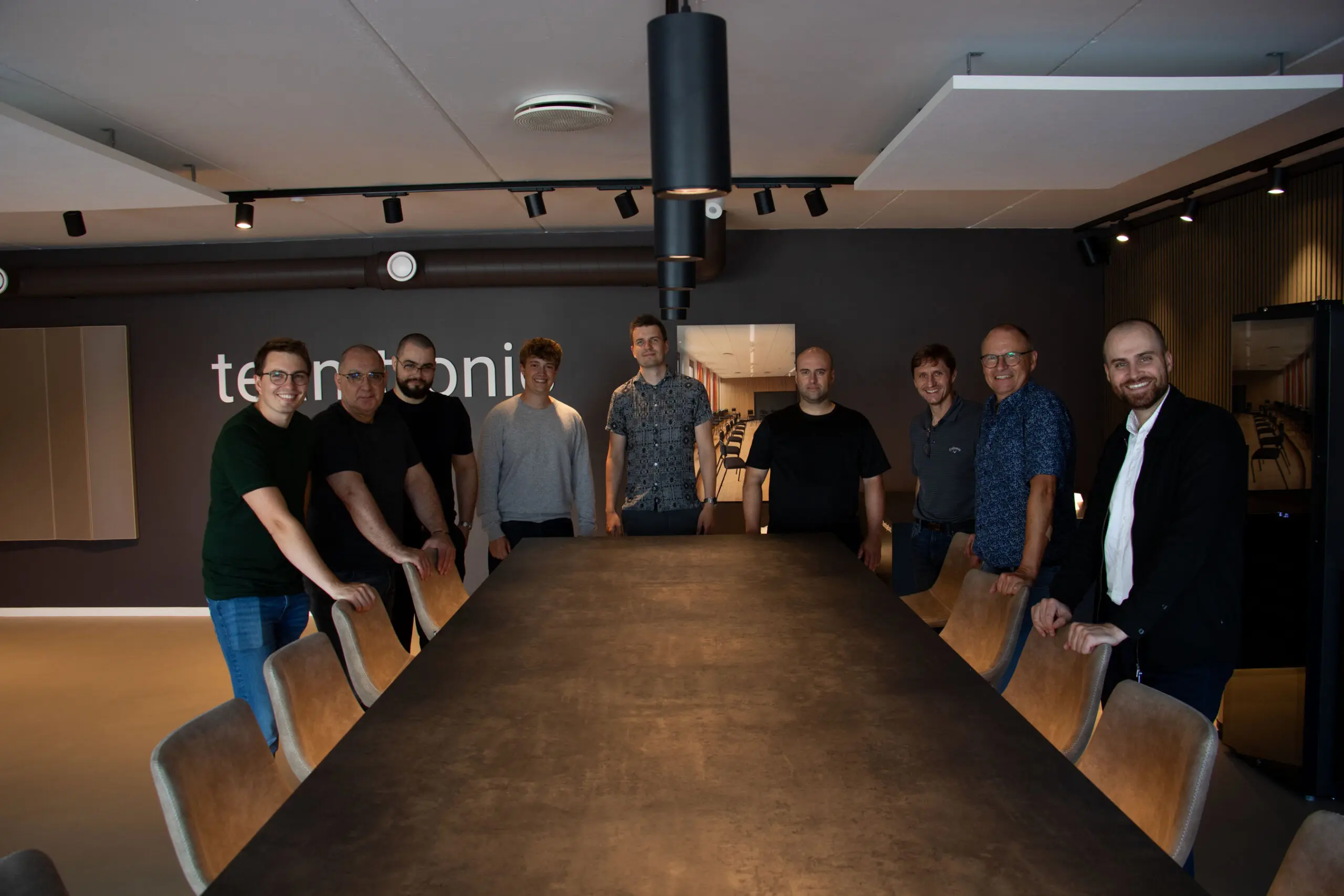
From left: Klaus Rise Jensen (Teamtronic), Vladimir Levarsky (OMS), Daniel Levarsky (OMS), Simon Foss (Teamtronic), Karsten Nellemose Svehage (Teamtronic), Mario Masar (OMS), Roman Krška (OMS), Poul Nellemose (Teamtronic) and Mathias Joachim Larsen (Teamtronic).
New strategic partnership to accelerate growth and European supply chains
Teamtronic today announces its co-ownership of the Slovakian lighting company OMS. The merger marks not only an investment in capacity and technology, but a strategic partnership that will be a key driver in Teamtronic's ambitions to drive international growth and strengthen its position in the European lighting market.
While Teamtronic has a strong position in consulting, customised solutions and close dialogue with the end customer, OMS adds solid production capacity, highly specialised R&D and many years of experience with international scaling. The combination of Teamtronic's market proximity and project understanding with OMS' industrial strength and technological platform creates a partnership with unique prerequisites for developing and delivering future lighting solutions on a large scale.
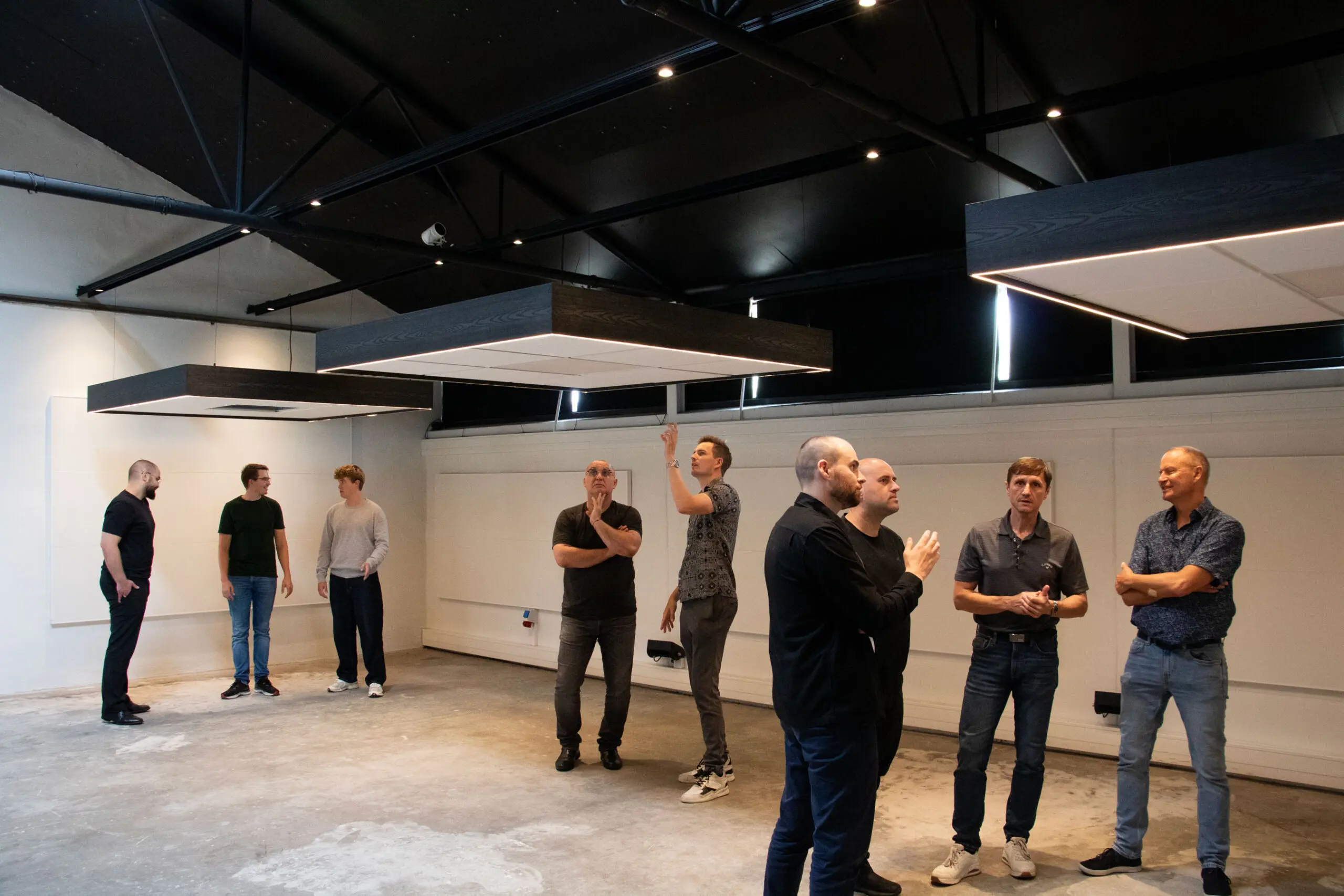
The ambitions of the two companies go hand in hand - and the wish is that they can continue to play well together through this close co-operation.
"Our strengths and experiences support each other very well and by working together we can continue to develop in the right direction - to the great benefit of our customers and partners" says Teamtronic Director, Mathias Joachim Larsen.
The co-ownership is an important element of the growth strategy towards 2028, which was launched in connection with the change of leadership in 2024. It focuses on three areas in particular: increased internationalisation, strengthening presence in the consultancy market and a targeted effort towards a more responsible climate footprint and strengthening responsible production.
Generational change with ambitious growth plan
Following the generational change that Teamtronic completed in 2021, when former CEO Poul Nellemose transferred ownership to his sons Karsten Nellemose Svehag and Klaus Rise Jensen, major growth ambitions have been on the agenda. The combination has lifted Teamtronic to its strongest financial year to date, with many years of hard work bearing fruit. In 2024, the company was able to deliver a result of DKK 7.9 million. DKK - a significant increase from DKK 3.1 million. DKK the year before.
The economic momentum has created the foundation for investments in both international growth and climate-responsible business models, where the co-ownership of OMS will be an important part.
Generational change with ambitious growth plan
With the publication of the company's first climate report in April 2025, Teamtronic is actively working to reduce its climate footprint throughout the value chain - from product development and technology to logistics and distribution. One of the key focus areas is to optimise supply chains and produce luminaires closer to the markets where the products are used, thereby reducing transport emissions and increasing delivery reliability.
The co-ownership in OMS is a strategically strong step in that direction. OMS' modern production facilities and R&D department in Slovakia allow Teamtronic to move parts of the production to Europe and develop customised lighting solutions in closer collaboration with end customers and consultants.
"At Teamtronic, we are committed to working actively to make a more responsible footprint and strengthen product development. Our co-ownership in OMS is a step in the right direction by producing luminaires in Europe - closer to the end customer," says Mathias Joachim Larsen, CEO of Teamtronic.
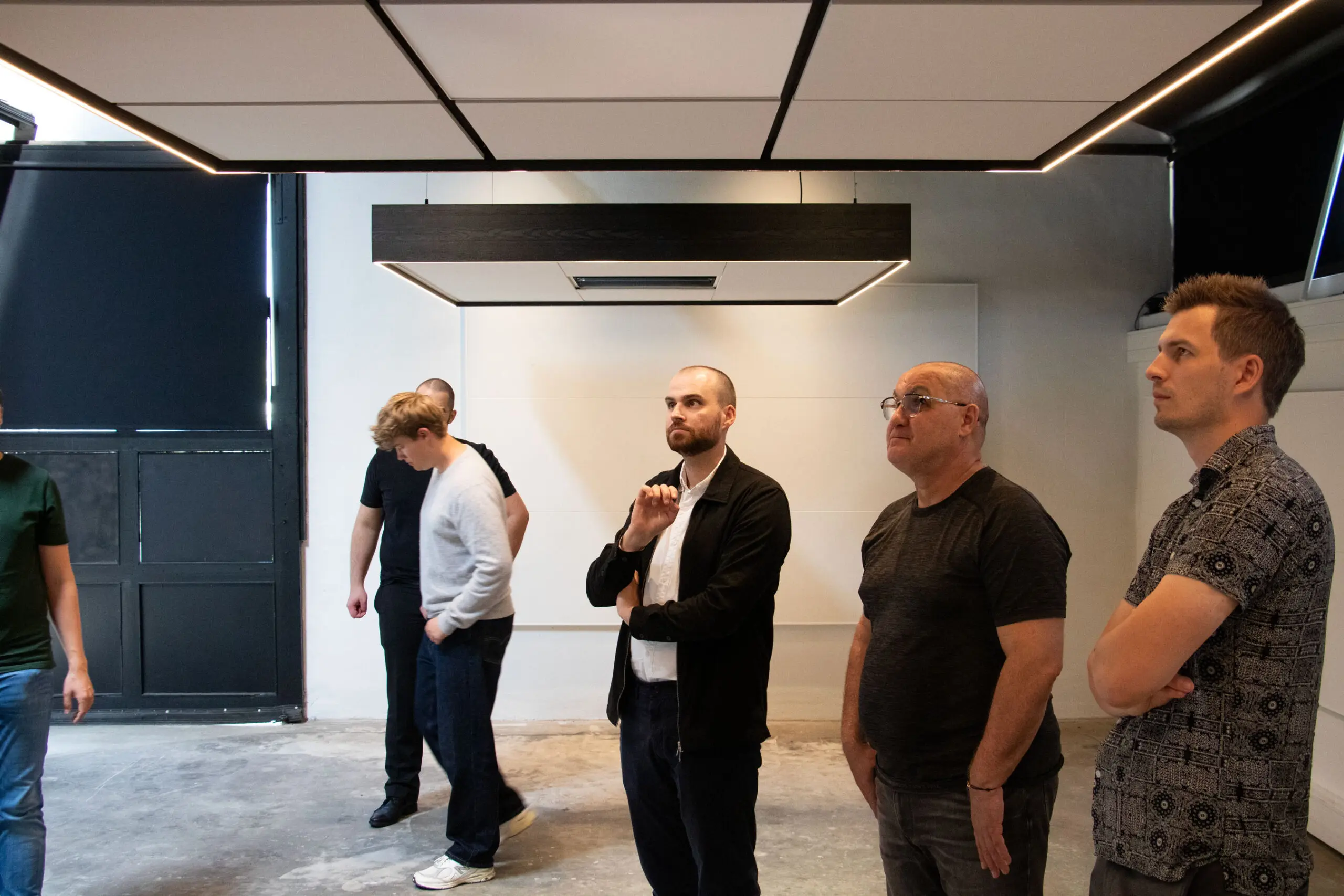
Enhanced consulting and product development for architects and engineers
The co-ownership of OMS also supports Teamtronic's ambition to expand its role as a strong consultancy partner for architects, engineers and clients who increasingly demand specialised sparring and project-specific solutions. Both companies have extensive technical expertise, deep industry experience and well-run working environments that complement each other.
Therefore, the co-ownership is based on a strong strategic and cultural fit between the two companies, which both share a value-based approach to responsible business, long-term partnership and technological development.
Together, the two companies form a partnership that strengthens the foundation for developing and delivering advanced lighting solutions to the professional market on a large scale. The partnership also supports Teamtronic's ambition to be the preferred supplier of basic lighting with a special focus on lighting technology and integrated ceiling systems. With a dedicated focus on the project market and specialisation in office buildings, schools and educational institutions, the health and medical sector and retail, Teamtronic is committed to improving the quality and effect of basic lighting through lighting technology and architectural solutions.
The partnership is not only a step towards an increased international presence, but also an important part of delivering future-proof lighting solutions to the project market.